
Reliable network and WiFi connectivity are essential for modern businesses. From accessing cloud applications and communicating with customers to processing transactions and sharing files, many daily business operations depend on a stable and secure network.
However, slow internet speeds, weak WiFi signals, frequent disconnections, and network congestion can affect employee productivity and disrupt business operations.
If your business is experiencing connectivity problems, here are some important factors to consider when improving your network and WiFi infrastructure.
Every business has different connectivity requirements.
A small office may only need reliable internet access and WiFi coverage, while a larger organisation, warehouse, retail outlet, or factory may require a more advanced network infrastructure.
Before upgrading your network, consider:
Understanding these requirements can help you choose a network solution that supports your current operations and future growth.
Weak WiFi signals can cause slow connections, dropped video calls, and difficulty accessing online systems.
Large offices, multiple floors, concrete walls, metal structures, and physical obstructions can all affect WiFi performance.
Common signs of poor WiFi coverage include:
A proper WiFi assessment can help identify coverage gaps and determine the best locations for access points.
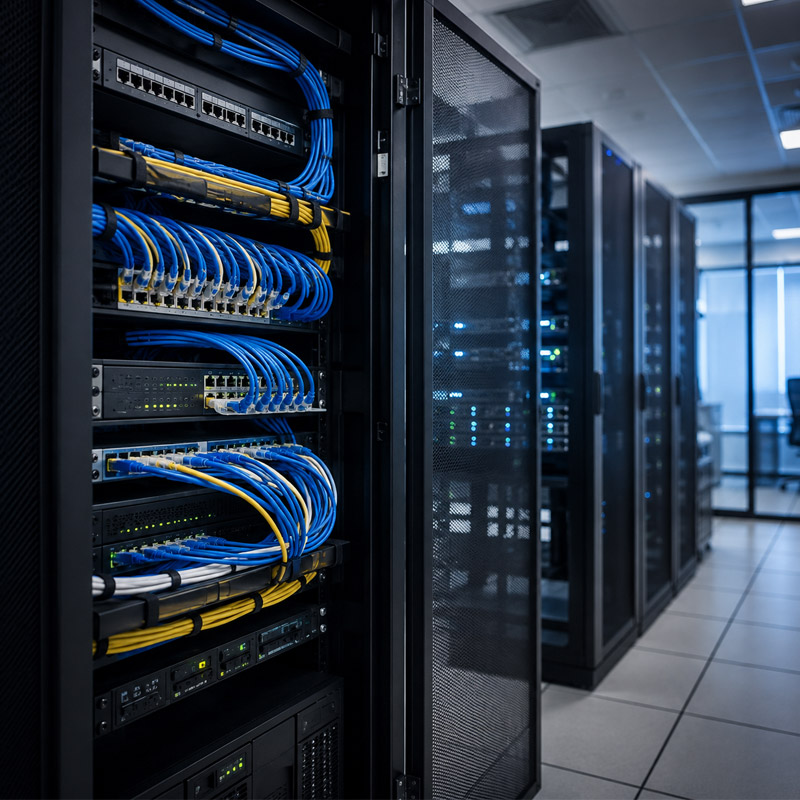
Network performance depends heavily on the equipment supporting your infrastructure.
Depending on your business requirements, your network may include:
Using outdated or unsuitable equipment can create bottlenecks and reduce overall performance.
The right equipment should be selected based on the number of users, connected devices, required coverage, network traffic, and security requirements.
Installing additional WiFi equipment does not always guarantee better coverage.
The placement of wireless access points plays an important role in network performance.
Poor placement can result in overlapping signals, interference, or areas with weak coverage.
A properly planned WiFi solution considers:
Strategic access point placement can help provide more consistent connectivity throughout your business premises.
Different devices may have different network requirements.
For example, your business may have:
Placing all devices on the same network can make management more difficult and may create unnecessary security risks.
Network segmentation allows different types of devices and users to be separated based on their requirements.
For example, guest WiFi can be separated from the main business network, while security devices can operate on a dedicated network segment.
This can improve network management, performance, and security.
A business network should not only be fast and reliable—it should also be secure.
Without proper security measures, unauthorised users or compromised devices may gain access to your network.
Important network security considerations may include:
A well-designed network should balance performance, reliability, and security.
Your network requirements may increase as your business grows.
You may hire more employees, add more devices, expand to a larger location, or introduce new technology.
A scalable network infrastructure can make it easier to support future expansion without rebuilding the entire system.
When planning your network, consider whether your infrastructure can support:
Planning ahead can help reduce future upgrade costs and minimise disruption to your business.
Network infrastructure requires regular monitoring and maintenance to continue performing reliably.
Without proper maintenance, businesses may experience problems such as outdated firmware, failing equipment, security vulnerabilities, or declining network performance.
Regular network maintenance can include:
Proactive maintenance can help identify issues before they affect your business operations.
A strong network infrastructure provides the foundation for many of your daily business operations.
Whether you are running an office, retail outlet, warehouse, factory, or commercial space, reliable connectivity can help improve productivity, communication, and overall efficiency.
The right network solution should be designed based on your business requirements rather than using a one-size-fits-all approach.
At Neera Technologies, we provide professional Network & WiFi Solutions designed to help businesses build reliable, secure, and scalable connectivity.
Our services can support your network infrastructure from planning and setup to troubleshooting, optimisation, and ongoing maintenance.
If your business is experiencing slow WiFi, unreliable connectivity, network coverage issues, or you are planning a new network installation, the right infrastructure can make a significant difference.
Contact Neera Technologies today to discuss your network and connectivity requirements and discover a solution designed for your business.